
Assign a rep to an item
Every item can carry a primary salesperson, set one at a time or in bulk from the inventory list. Set an account-wide default once and new items inherit it, so nothing is ever unclaimed by accident.
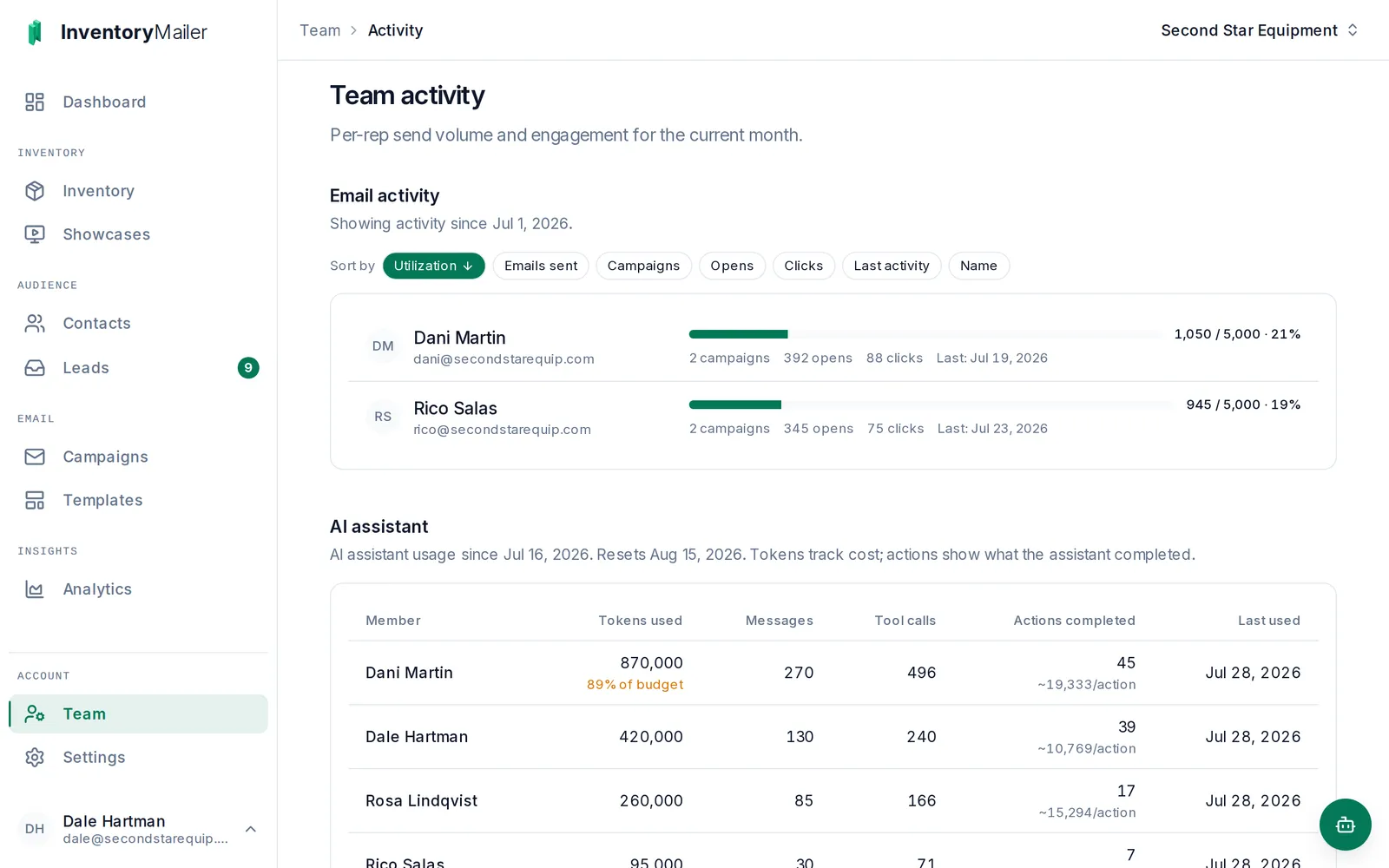
General-purpose email tools are built around one shared contact list. But inventory businesses have commissioned salespeople with their own books. Sales Teams gives every seat their own private contacts, private groups, send caps, and dashboard, locked to them at the foundation, not just hidden behind a setting.
Every contact a rep creates or imports is theirs. Peers cannot see it. Reassign it when someone leaves.
Their segments, their rules, their members. No other rep sees them; owners and admins do.
Admin-set ceilings per user per month, enforced at send time. Cap a new rep at 500 while they ramp.
Their sends, their opens, their clicks. Their own performance and nobody else's.
Volume, open and click rates, last campaign, last active, for everyone. Reassign contacts when someone leaves.
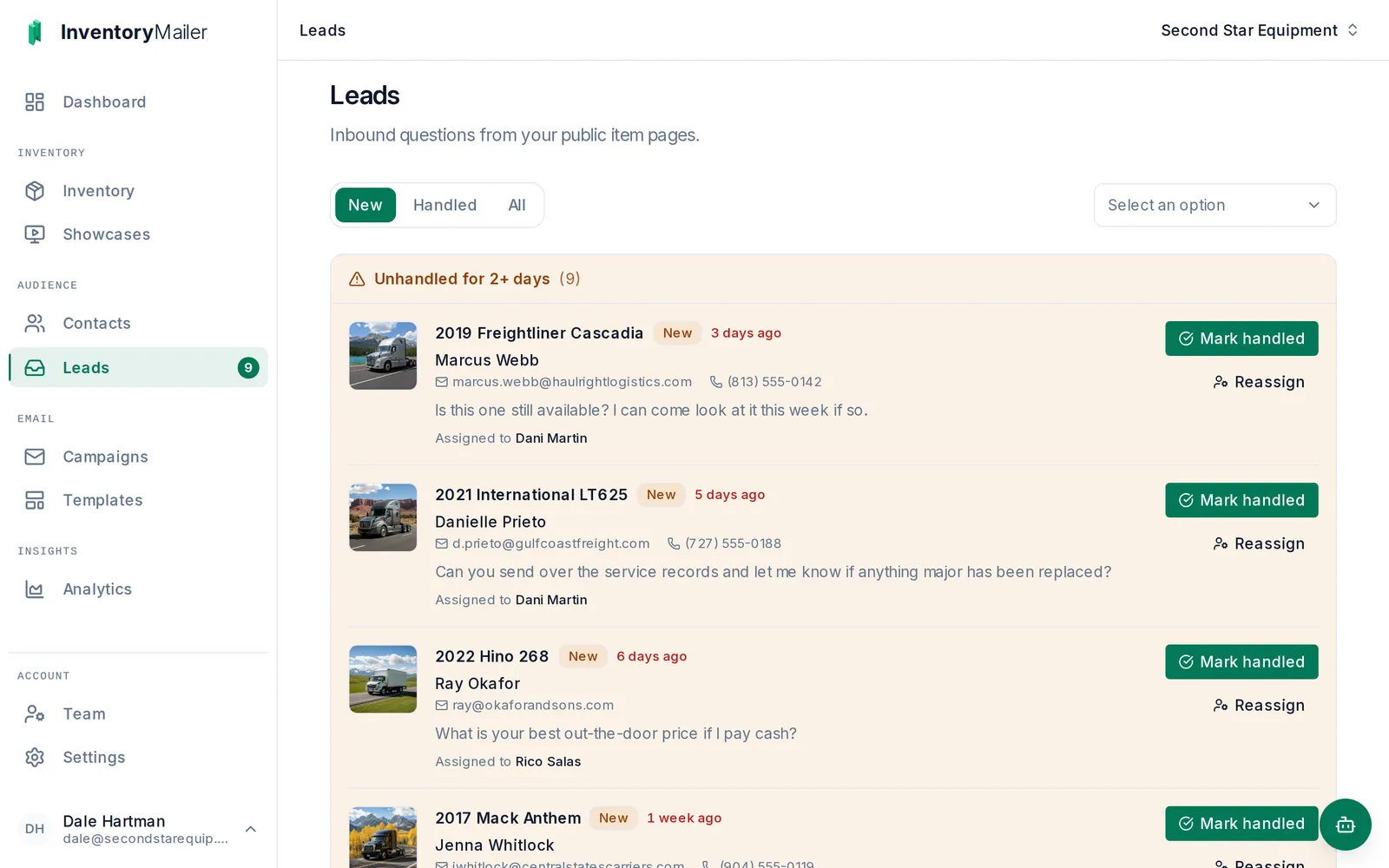
A private book is half the problem. The other half is what happens when a buyer surfaces: who owns that conversation, and how fast do they hear about it. Assign a salesperson to an item and both answers stop being a group chat. Assignment and lead routing are on every plan, not just Sales Seats; any team member can be assigned to an item.
Every item can carry a primary salesperson, set one at a time or in bulk from the inventory list. Set an account-wide default once and new items inherit it, so nothing is ever unclaimed by accident.
The assigned rep's name, title, and the contact details they chose to publish appear on that item's public page. Each member controls their own card and it is off until they turn it on, so nobody's cell number ships by surprise.
A buyer asking about that item creates a lead routed to the assigned rep, with the item, the price they saw, and where they came from attached. Owners and admins see every lead and can reassign; reps see their own.
Every private contact, group, and record is scoped at the data level, so the separation holds on every read rather than depending on the screen you are looking at. Owners and admins still see everything.
Already counted in your plan's seat allotment. Just turn on Sales Seat for them.
Beyond your plan's included seats. Pay for the extra seat plus the Sales Seat addon.
Available on every plan. Starter, Pro, Business. Add a seat and it is prorated on your next invoice. Turn one off and access ends immediately; the seat comes off at your next renewal.
Try the product first. The 30-day Pro trial is for deciding whether it fits how you sell; when you pick a plan, turn on a Sales Seat for each rep at $15 a month.